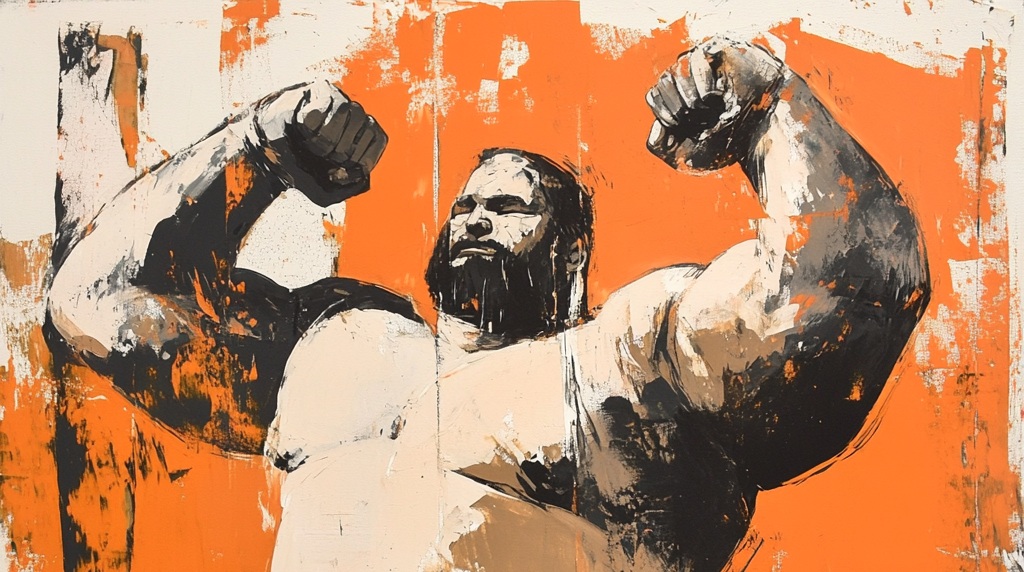
What Is CrossFit, Really?
At its core, CrossFit is a high-intensity fitness program that combines strength training, cardio, gymnastics, and functional movement. Classes typically include a warm-up, a skill or strength component, and a WOD (Workout of the Day). Every WOD is timed or scored, and the focus is on improving your performance over time.
You’ll see movements like squats, deadlifts, kettlebell swings, rowing, Olympic lifts, push-ups, box jumps, and more. It’s fast-paced, competitive, and varied—and for some, that’s exactly what makes it addictive.
But what if you’re a big or tall guy, or even starting from a place of obesity? Can CrossFit still work for you?
The answer: Yes—but it depends on how it’s approached.
What to Expect as a Bigger or Taller Beginner
Walking into your first CrossFit gym (aka a “box”) can be intimidating—especially if you don’t see anyone else with your build. But being bigger doesn’t mean you can’t do CrossFit. It just means you’ll need to approach it with awareness, customization, and patience.
Expect to:
- Be asked to scale or modify certain movements
- Learn brand-new skills (or relearn basic ones with better form)
- Encounter intense workouts, but with built-in flexibility
- Be surrounded by a community that values effort over perfection
You won’t need to be able to do pull-ups or Olympic lifts right away. But you will need to check your ego at the door—and that’s a good thing.
Considerations for Big and Tall Men
CrossFit wasn’t originally built with larger bodies in mind—but that doesn’t mean it can’t be adapted. Here are some key things to consider:
1. Joint Stress and Impact
Movements like box jumps, burpees, and running can be tough on knees, hips, and ankles—especially if you’re carrying more weight. Choose lower-impact substitutions (rower, step-ups, air bike) when needed.
Related: How to Train With Joint Pain and Mobility Issues
2. Mobility and Range of Motion
Big and tall men often struggle with shoulder mobility, deep squats, or overhead lifts due to limb length or tight joints. Warm-ups and progressions become non-negotiable for safety and performance.
3. Barbell Mechanics
Olympic lifts like the clean & jerk or snatch require technical precision—and can be harder to master with long limbs or larger torsos. That’s not a reason to avoid them, but it is a reason to progress slowly and with coaching.
4. Scaling Is Not Failing
Smart CrossFit gyms encourage scaling workouts, meaning you can substitute a move to match your current ability. It keeps workouts challenging without compromising safety.
Pros of CrossFit for Big and Tall Men
- Functional Fitness: Builds real-world strength, balance, and coordination
- Variety: You’ll never get bored doing the same routine
- Progress Tracking: The measurable format keeps you motivated
- Community Support: Encouraging environment that values showing up
- Customization: Every workout can be scaled for your level
Cons to Be Aware Of
- Risk of Injury: Without proper form, intensity can increase injury risk
- Peer Pressure: Competitive energy may tempt you to push too hard too soon
- Mobility Limitations: Some movements may be difficult due to size or range
- Not All Gyms Are Equal: Coaching quality varies—choose wisely
- Overtraining: For beginners, too much intensity too fast can lead to burnout
Related: How to Enjoy Exercise Without Making It About Weight Loss
How to Know If CrossFit Is Right for You
Ask yourself these questions:
- Do I enjoy a structured, class-based environment?
- Am I open to learning new skills (and failing sometimes)?
- Can I check my ego and scale movements when needed?
- Do I have access to a gym with qualified coaches who understand larger bodies?
- Am I looking for a long-term path to strength and functionality, not just fat loss?
If the answer is yes to most of these, CrossFit could be a fantastic fit—as long as you choose the right gym and pace yourself appropriately.
Tips for Getting Started
- Visit a Few Boxes: Not all CrossFit gyms are created equal. Look for coaches who listen, explain things clearly, and help you modify.
- Ask About Scaling: A good coach will offer modifications without judgment.
- Start with a Foundations or On-Ramp Program: These intro classes are crucial for safety.
- Prioritize Form Over Speed: It’s not a race—quality always beats quantity.
- Track Progress, Not Perfection: Use a notebook or app to log your workouts and wins.
Final Thoughts
CrossFit can be a powerful tool for big and tall men who want to get stronger, move better, and build confidence. It’s not about looking like everyone else—it’s about finding your own lane, embracing the challenge, and progressing at your pace.
Yes, it’s intense. Yes, it’ll push you. But with the right mindset, the right modifications, and the right environment, CrossFit can be a place where big bodies thrive—not just survive.

Leave a comment