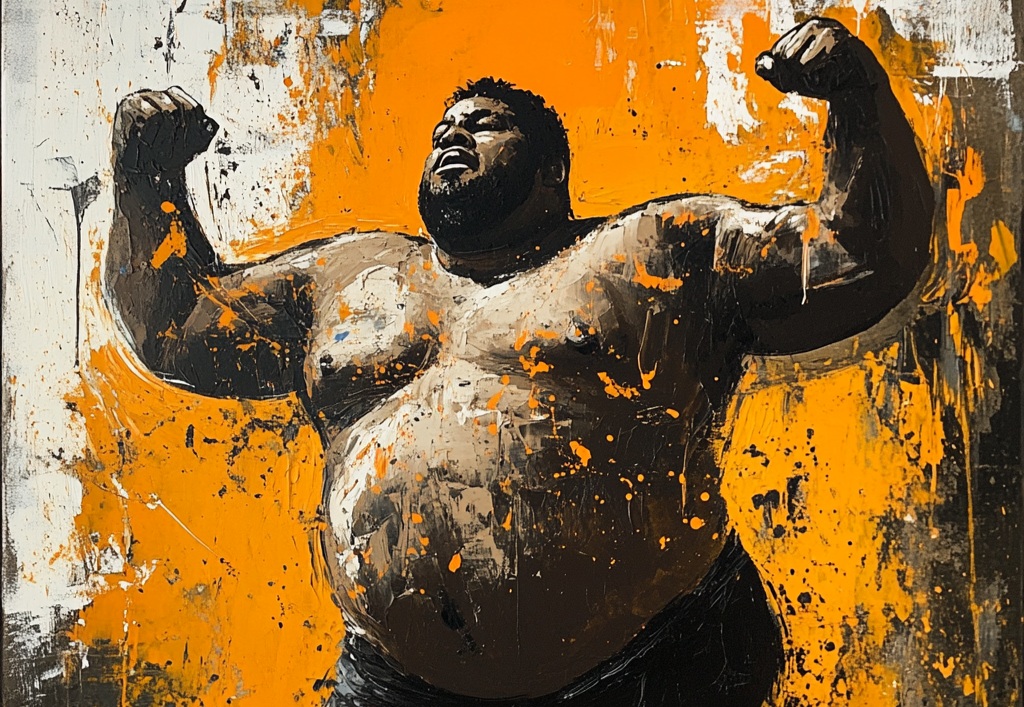
When you’re starting strength training at 300+ pounds, it’s easy to feel like the odds are stacked against you. Most fitness advice is written for people who are already lean or moderately fit, not for big guys (and tall guys) who are trying to take that first step toward lifting, moving better, and getting healthier.
But here’s the truth: strength training is one of the best things you can do for your body at a higher weight. It builds muscle, supports fat loss, protects your joints, and gives you that confidence boost that cardio alone rarely delivers. The key is knowing what works — and what doesn’t — when you’re starting from a bigger frame.
Why Strength Training Is Different at 300+ Pounds
Being big has some unique challenges in the gym:
- Joint stress – Knees, hips, and ankles are already under more load, so poor exercise choices can make pain worse.
- Range of motion – Belly, chest, or thigh mass can limit certain movements (like deep squats or push-ups on the floor).
- Energy demands – Your body works harder at a higher weight, so fatigue comes on faster.
- Gym environment – Let’s be real: some gyms are not built with bigger bodies in mind, and that can add mental barriers.
But there are also advantages:
- Natural strength – Many big men already carry more absolute strength than average-sized beginners.
- Stability in lifts – A heavier frame can actually help with balance in certain barbell lifts.
- Potential for fast gains – Muscle responds quickly to training, especially if you’re new to lifting.
Related: How to Train With Joint Pain and Mobility Issues
What Works: Big-Guy-Friendly Strength Training
Here’s what tends to work best for guys starting at 300+ pounds:
1. Machines First, Free Weights Second
- Machines like the leg press, chest press, and lat pulldown are joint-friendly and don’t require balance.
- As strength builds, transition to compound barbell movements like squats, bench press, and rows — but don’t rush it.
2. The Big 3 (Adapted for You)
- Squat variations: Goblet squats or box squats are easier on the knees and limit depth safely.
- Push variations: Incline dumbbell press or machine press work better than floor push-ups early on.
- Pull variations: Seated rows and assisted pull-ups build back strength without overloading joints.
3. Short Sets, Controlled Rest
- Stick to 3–6 reps for compound lifts to build strength without exhausting your cardio system.
- Rest 2–3 minutes between sets to recover — this isn’t HIIT, it’s controlled strength building.
4. Accessory Work for Joint Support
- Focus on hamstrings, glutes, and core to reduce knee and back strain.
- Bands, stability ball movements, and hip bridges work wonders.
What Doesn’t Work: Mistakes That Burn Out Big Lifters
❌ High-Rep Circuits Right Away
Your joints and lungs will hate you if you dive straight into CrossFit-style “workouts of the day.” Save conditioning work for later.
❌ Ignoring Mobility
Skipping warmups and flexibility training leads to stiffness, pain, and plateaus. Even 5 minutes of dynamic stretching helps.
❌ Comparing to Smaller Lifters
A 150-pound guy pulling 315 doesn’t mean you’re behind if you’re pulling 185. Your journey is different, and strength relative to body size matters.
❌ Extreme Diet + Extreme Lifting
Crash dieting while lifting heavy almost always leads to burnout. Fuel your body with enough protein and whole foods to recover properly.
Sample Strength Routine for a 300+ Pound Beginner
Here’s a 3-day-per-week starter template (30–45 minutes per session):
Day 1 – Push (Chest, Shoulders, Triceps)
- Seated machine press – 3×8
- Dumbbell incline press – 3×6–8
- Overhead dumbbell press – 3×8
- Tricep rope pushdowns – 3×10–12
Day 2 – Pull (Back, Biceps)
- Seated cable row – 3×8
- Lat pulldown (wide grip) – 3×8
- Face pulls (for shoulders/posture) – 3×12
- Dumbbell curls – 3×10
Day 3 – Lower Body & Core
- Box squat (light barbell or goblet squat) – 3×5
- Leg press – 3×8
- Glute bridges – 3×12
- Plank or dead bug – 3×30 sec hold
The Mindset Shift That Matters Most
Strength training at 300+ pounds isn’t about chasing six-pack abs. It’s about building a foundation of muscle, confidence, and capability that makes every other part of fitness easier — walking, cardio, mobility, even day-to-day life.
If you stick with it for just 3–6 months, you’ll notice:
- More energy and stamina
- Clothes fitting differently
- Joints feeling stronger
- That addictive sense of “I’m getting somewhere”
And that’s when the real transformation begins.
Final Thoughts
Strength training as a bigger guy requires patience, adaptation, and a willingness to play the long game. Skip the fads. Skip the crash programs. Stick to movements that feel good, build strength steadily, and support your body where it is today.
Because here’s the truth: being 300+ pounds doesn’t make you weak — it just makes your starting line different. And strength training is the best way to move that line forward.

Leave a comment