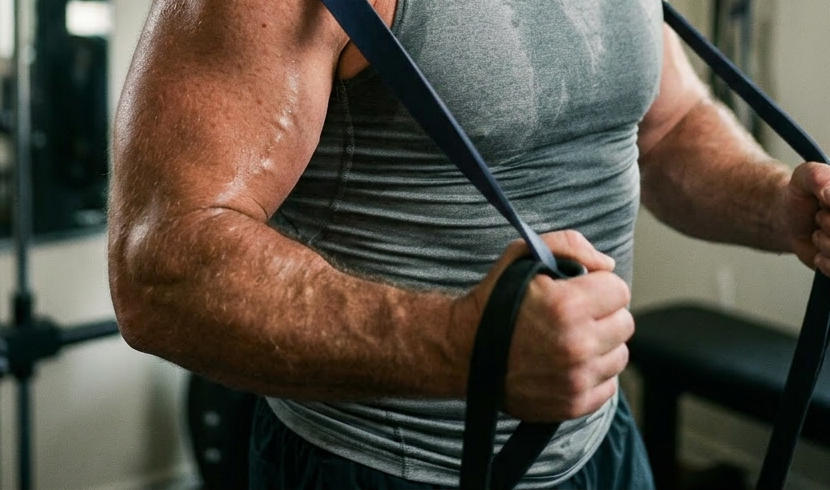
Starting Fitness Doesn’t Have to Feel Impossible
For a lot of bigger guys, getting into fitness feels intimidating long before the first workout even begins.
Maybe you’ve thought about joining a gym but never quite felt comfortable walking through the doors. Maybe you’ve watched fitness content online and felt like everyone already knew what they were doing except you. Or maybe you’ve tried working out before and quickly ran into sore joints, exhaustion, embarrassment, or burnout.
That’s more common than people realize.
One of the biggest problems with modern fitness culture is that so much of it assumes you’re already in shape. Most workout programs are built around people who already know how to train, already feel comfortable in a gym, and already have a baseline level of mobility and confidence.
Resistance bands are different.
They’re approachable. They’re affordable. They’re low-impact. And for a lot of bigger beginners, they remove many of the barriers that make fitness feel overwhelming in the first place.
You don’t need a gym membership. You don’t need a garage full of equipment. You don’t need to know what every machine does or feel pressured to keep up with people online. You just need a place to start.
For many people, resistance bands are exactly that.
What Are Resistance Bands?
At their core, resistance bands are simply elastic bands that create tension during movement. Instead of lifting a metal weight against gravity, your muscles work against the tension created by the band stretching.
That sounds simple, but resistance bands are surprisingly versatile. They can be used for strength training, mobility work, stretching, muscle building, rehabilitation, and even cardio-focused workouts. Physical therapists use them. Athletes use them. Beginners use them. Plenty of experienced lifters use them too.
One of the biggest misconceptions about resistance bands is that they’re somehow “less serious” than traditional weights. People tend to think of them as rehab tools or something only used in warmups, but that really undersells how effective they can be.
In reality, resistance is resistance. Your muscles don’t know whether tension is coming from a dumbbell, a cable machine, or a resistance band. What matters is that your body is working against resistance consistently over time.
That’s especially important for beginners because consistency matters far more than perfection.
Related: What Are Resistance Bands? A Beginner-Friendly Introduction
Why Resistance Bands Work So Well for Bigger Beginners
A lot of workout advice online is created by people who have been active their entire lives. They often forget what it feels like to start from scratch while carrying extra weight.
That changes the experience significantly.
When you’re bigger, certain exercises feel different. High-impact movements can feel rough on the knees. Some gym machines feel uncomfortable. Even walking into a crowded weight room can feel mentally exhausting before the workout even starts.
Resistance bands solve a lot of those problems.
For starters, they’re much easier on the joints than many traditional forms of training. The tension is smoother and more controlled, which can make movements feel more manageable for people dealing with knee discomfort, tight hips, lower back issues, or general stiffness from inactivity.
They also make home workouts much more realistic. That may not sound like a huge deal on paper, but psychologically, it matters a lot. Being able to exercise privately removes a major source of anxiety for many beginners. You can focus on learning movements and building consistency without feeling like people are watching you or judging your experience level.
There’s also something important about the simplicity of resistance bands. They lower the barrier to entry. You don’t need to learn dozens of machines or spend thousands building a home gym. A simple set of bands can allow you to train your entire body in a small apartment, bedroom, or living room.
For someone trying to build momentum, that accessibility matters more than most people think.
Related: Why Resistance Bands Should Be Your First Choice as a Beginner
Can You Actually Build Muscle With Resistance Bands?

This is usually the first question people ask after they start taking resistance bands seriously.
The answer is yes.
Resistance bands absolutely can help build muscle, especially for beginners. In fact, many people underestimate how challenging band exercises can become once tension increases and movements are performed correctly.
Your muscles respond to tension and effort. Resistance bands provide both.
One of the unique things about bands is that tension increases as the band stretches. That means exercises often become more difficult at the top of the movement, creating constant resistance throughout the rep. In some ways, that can actually create a different kind of challenge compared to free weights.
Now, are resistance bands going to turn someone into a professional bodybuilder overnight? Of course not. But for beginners trying to lose weight, build strength, improve conditioning, or simply become more active, they are more than effective enough.
And honestly, effectiveness isn’t even the biggest advantage here.
The real advantage is sustainability.
A workout program only works if you can stick with it consistently. Resistance bands tend to feel less intimidating, more approachable, and easier to integrate into daily life. That makes consistency much more achievable for many beginners.
Related: Can You Actually Build Muscle With Resistance Bands?
The Different Types of Resistance Bands
Not all resistance bands are the same, and understanding the differences can help you avoid buying equipment that doesn’t fit your goals.
The most common beginner-friendly option is the tube-style resistance band with handles. These usually come in sets with interchangeable resistance levels and accessories like door anchors. They feel closest to traditional gym equipment and work well for exercises like rows, chest presses, curls, and shoulder movements.
Loop bands are another common option. These are circular bands often used for lower body exercises and mobility work. You’ve probably seen them used for glute activation exercises online. They’re simple, lightweight, and especially useful for beginners looking to improve stability and mobility.
There are also larger pull-up assist bands, which are thicker and capable of producing significantly more resistance. These are extremely versatile and can eventually be used for more advanced strength training movements.
Fabric resistance bands have also become popular in recent years because they tend to feel more comfortable against the skin and don’t roll up as much during exercises.
For most beginners, though, a simple tube-style set with handles is probably the easiest place to start.
Related: The Different Types of Resistance Bands Explained
Choosing the Right Resistance Level

One of the biggest mistakes beginners make is assuming they should immediately use the heaviest resistance possible.
That mindset usually comes from traditional gym culture where heavier weight is often associated with progress. But when you’re first starting out, learning movement quality and building consistency matter much more than maximizing resistance.
If the bands are too heavy, exercises become frustrating quickly. Form breaks down, movements feel awkward, and workouts become exhausting instead of encouraging.
There’s nothing wrong with starting lighter.
In fact, most people are better off beginning with manageable resistance and focusing on controlled reps, proper positioning, and consistency. Over time, progression happens naturally.
Fitness isn’t about proving something during your first week. It’s about building habits you can realistically sustain.
Related: Resistance Bands: How to Choose the Right Resistance Level
The Best Resistance Band Exercises for Beginners
One of the nice things about resistance bands is that you don’t need a huge list of exercises to get started.
A few foundational movements are enough to build a solid beginner routine.
Band rows are excellent for improving posture and strengthening the upper back, especially if you spend most of your day sitting at a desk. Chest presses provide a beginner-friendly pushing movement that feels less intimidating than traditional bench pressing. Squats with resistance bands can help build lower body strength while still feeling approachable for larger beginners.
Shoulder presses, curls, and band pull-aparts are also great additions because they target muscles that help improve posture, stability, and overall upper body strength.
The goal early on is not to train like a professional athlete. The goal is simply to move consistently and build confidence in your ability to exercise regularly.
That matters far more than having the “perfect” routine.
Related: 5 Best Resistance Band Exercises for Beginners
A Simple Beginner Workout
A lot of people make the mistake of trying to completely overhaul their lives overnight. They jump into six-day workout plans, impossible diet restrictions, and exhausting routines that feel miserable within two weeks.
You don’t need that.
A simple full-body resistance band workout done two or three times a week is more than enough for most beginners.
A basic routine might include rows, chest presses, squats, shoulder presses, curls, and pull-aparts. Nothing fancy. Nothing extreme. Just foundational movements done consistently over time.
That’s the part fitness culture often skips over. Progress usually comes from boring consistency, not motivational extremes.
Related: Beginner Resistance Band Workout: A Simple Routine to Start Right Away
Resistance Bands vs Dumbbells
People often frame this as an either-or debate, but it really isn’t.
Dumbbells are great. Resistance bands are great too. They simply offer different advantages.
Dumbbells provide straightforward resistance and are excellent for traditional strength training. Resistance bands, on the other hand, are more portable, easier on the joints, and significantly more accessible for home workouts.
For bigger beginners specifically, resistance bands often feel less intimidating and more manageable. That alone can make them the better starting option.
Eventually, many people use both. But there’s absolutely nothing wrong with resistance bands being your primary form of training, especially in the beginning.
Related: Resistance Bands vs Dumbbells: Which is Better for Beginners?
Final Thoughts
A lot of bigger guys delay fitness because they think they need to become confident before they begin.
But confidence usually comes after consistency, not before it.
Resistance bands are powerful because they reduce friction. They make workouts feel more approachable. They remove many of the barriers that stop people from getting started in the first place.
And honestly, getting started is the hardest part.
You don’t need to become a fitness expert overnight. You don’t need a perfect body before you deserve to work on yourself. You don’t need to train like an influencer to make meaningful progress.
You just need a manageable starting point and the willingness to keep showing up.
For a lot of people, resistance bands are exactly that starting point.
Leave a Reply